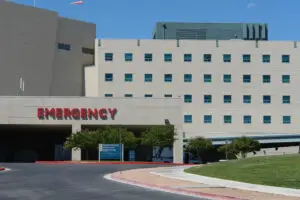
Healthcare facilities have the most complex fuel compliance requirements of any facility type in the country. And it’s not close.
A typical hospital with backup generators faces overlapping mandates from three separate authorities — CMS (federal law), Joint Commission (accreditation), and NFPA 110 (technical standard) — each with their own testing schedules, documentation expectations, and consequences for non-compliance.
Most healthcare facility managers handle the basics: the generators get tested monthly, the transfer switches get exercised. But the compliance requirements extend well beyond the generators themselves — into the fuel system that feeds them. And that’s where we see the biggest gaps.
Failed fuel quality. Undocumented inspections. SPCC plans that haven’t been updated in a decade. These aren’t hypothetical problems — they’re the findings that show up in Joint Commission surveys and the conditions that cause generators to fail during the storms and emergencies when they’re needed most.
This guide breaks down exactly what’s required, how the three compliance layers interact, and what healthcare facilities consistently miss.
Want the quick version? Run your facility through Compliance Genius — select “Healthcare Facility” and get your personalized compliance checklist in under 2 minutes.
The Three-Layer Compliance Stack
Healthcare generator fuel compliance operates on three interconnected layers. Understanding how they relate to each other is essential — you can’t satisfy one without addressing all three.
Layer 1: CMS Emergency Preparedness Rule (Federal Law)
The CMS Emergency Preparedness Rule is federal regulation, not optional guidance. It applies to all 17 types of Medicare and Medicaid participating providers, including:
-
Hospitals
-
Critical access hospitals
-
Long-term care (LTC) facilities
-
Ambulatory surgery centers (ASCs)
-
End-stage renal disease (dialysis) facilities
-
Home health agencies
-
Hospice
-
Psychiatric residential treatment facilities
What CMS requires for fuel/generator compliance:
-
An emergency plan that includes a risk assessment
-
Policies and procedures for emergency power operations
-
A communication plan for emergencies
-
Training and testing: minimum two exercises per year — at least one full-scale or functional exercise, the second can be a tabletop exercise
-
A plan demonstrating the ability to sustain operations for 96 hours — including fuel supply, delivery contracts, and contingency plans. (Note: CMS requires a planning capability for 96 hours, not necessarily stockpiling 96 hours of fuel on-site. Facilities must demonstrate how they would maintain operations through fuel reserves, resupply agreements, or alternative arrangements.) Calculate your 96-hour fuel requirement →
CMS doesn’t tell you how to test your generator. For that, it references NFPA 110. But CMS defines the emergency preparedness framework you must have in place, and non-compliance puts your conditions of participation at risk — meaning your facility’s ability to receive Medicare and Medicaid reimbursement.
Layer 2: Joint Commission EC.02.05.07 (Accreditation)
The Joint Commission is a voluntary accreditation organization, but “voluntary” is misleading — approximately 80% of U.S. hospitals are Joint Commission accredited, and accreditation provides “deemed status” for CMS compliance. Losing accreditation is effectively losing Medicare reimbursement.
Joint Commission standard EC.02.05.07 specifically addresses the management of the environment of care, including emergency power systems. Surveys are unannounced and typically occur every 30–36 months.
What Joint Commission requires:
-
Monthly generator testing with simulated power loss
-
Monthly transfer switch operation testing
-
Monthly battery testing (conductance or specific gravity)
-
Weekly generator inspections (fluid levels, battery condition, cleanliness, leaks)
-
Load bank testing per NFPA 110 schedule (36-month 4-hour test)
-
Complete documentation of every test, inspection, and maintenance activity
-
Fuel quality verification
Joint Commission surveyors will ask to see your testing logs, maintenance records, and SPCC plans during accreditation surveys. They’re looking for a continuous compliance program, not a scramble of documentation assembled the week before the survey.
Alternative: Some healthcare facilities use DNV-GL accreditation instead of Joint Commission. DNV-GL has parallel emergency power requirements and uses a continuous survey model (annual visits rather than triennial), which some facilities prefer.
Layer 3: NFPA 110 (Technical Standard)
NFPA 110 (current edition: 2025) — Standard for Emergency and Standby Power Systems — is the technical backbone that both CMS and Joint Commission reference. It defines the specific testing protocols, performance criteria, and maintenance schedules for emergency power supply systems (EPSS).
New to NFPA 110? See our plain-language NFPA 110 explainer for an overview of the classification system (Type, Class, Level) and who must comply.
Key NFPA 110 concepts for healthcare:
-
Level 1 systems (life safety, critical care) have the strictest requirements — this is what most hospital generators are classified as
-
Level 2 systems (less critical) have slightly relaxed timelines but similar testing requirements
-
NFPA 110 defines the EPSS as the entire chain: generator, fuel system, transfer switch, distribution, and controls
How the three layers connect: CMS requires emergency preparedness. Joint Commission surveys for it. NFPA 110 defines how to technically achieve it. You need all three working together.
Required Tests and Schedules
Here’s the consolidated testing schedule for a typical Joint Commission-accredited hospital with backup generators, based on the compliance requirements mapped in our Compliance Genius system:
Monthly Tests
| Test | Standard | Duration | Details |
|---|---|---|---|
| Generator load test | NFPA 110 / JC EC.02.05.07 | ~1 hour | 30 min minimum at ≥30% nameplate load. Must run every 20-40 days. |
| Transfer switch test | NFPA 110 / JC EC.02.05.07 | ~30 min | Simulated power loss to verify automatic transfer |
| Battery test | NFPA 110 / JC EC.02.05.07 | ~30 min | Conductance or specific gravity measurement |
Why 30%? Generators running below 30% load are prone to wet stacking — incomplete combustion that damages exhaust systems and reduces reliability. Use the free Generator Maintenance Scheduler to track your NFPA 110 testing deadlines.
Weekly Tests
| Test | Standard | Duration | Details |
|---|---|---|---|
| Generator inspection | NFPA 110 | ~30 min | Visual: fluid levels, battery condition, cleanliness, leaks |
Annual Tests
| Test | Standard | Duration | Details |
|---|---|---|---|
| Fuel quality testing | NFPA 110 (ASTM D975-24) | ~1 hour | Diesel analysis: water content, sediment, microbial contamination |
| SPCC personnel training | EPA 40 CFR 112 | ~2 hours | Oil-handling procedures and spill response |
| Emergency preparedness exercise | CMS | ~4 hours | Full-scale or functional exercise (2 per year for CMS) |
| Tank inspection | EPA SPCC | Varies | Physical inspection of storage tanks and containment |
Multi-Year Tests
| Test | Standard | Frequency | Details |
|---|---|---|---|
| 36-month load test | NFPA 110 | Every 3 years | 4-hour continuous load at ≥30% nameplate |
| SPCC Plan review | EPA 40 CFR 112 | Every 5 years | Complete plan review/update, PE certification if >10,000 gal |
The #1 Missed Item: Fuel Quality Testing
In our experience working with healthcare facilities, the single most commonly missed compliance requirement is annual fuel quality testing per ASTM D975-24.
Here’s why it matters: diesel fuel degrades. Water condensation, microbial growth (often called “diesel bug”), sediment accumulation, and chemical instability all progress over time — especially in tanks that aren’t turned over frequently. A hospital generator that runs for testing 30 minutes a month but sits idle the rest of the time is running on fuel that’s slowly deteriorating.
When the power goes out and the generator needs to run for an extended period — potentially up to 96 hours or more — degraded fuel can cause:
-
Fuel filter clogging — generator shuts down
-
Injector fouling — reduced power output, potential failure
-
Water in fuel — corrosion, microbial acceleration, engine damage
-
Sediment — clogged fuel lines, blocked transfer pumps
NFPA 110 requires annual fuel quality testing per ASTM D975-24. This isn’t optional. It’s a defined compliance requirement that protects the entire emergency power chain. For more on the real-world consequences of fuel neglect, see our related post: The Hidden Cost of Contaminated Generator Fuel in Healthcare.
Survey-Ready Documentation
Joint Commission surveyors don’t just check whether you’re doing the testing — they check whether you can prove you’re doing the testing. Documentation gaps are one of the top findings in EC surveys.
What Surveyors Look For
-
Test logs with dates, results, duration, and tester identification for every monthly, weekly, and annual test
-
Maintenance records showing corrective actions for any deficiencies found
-
SPCC Plan — current, signed, PE-certified if required
-
Fuel quality test results — lab reports from ASTM D975-24 testing
-
Emergency preparedness documentation — exercise records, after-action reports
-
Training records — personnel trained on oil-handling, spill response, generator operations
Common Documentation Gaps
-
Missing fuel quality lab reports — tests not performed or results not filed
-
Incomplete test logs — dates recorded but not duration or load percentage
-
Lapsed SPCC plans — plan is 7+ years old, facility has changed, no PE review
-
No corrective action documentation — deficiency found during inspection but no record of resolution
-
Training not documented — training occurred but sign-in sheets or records not maintained
Digital vs. Paper
More healthcare facilities are moving to digital compliance tracking, but the format matters less than the completeness and retrievability. A surveyor asking to see your last 12 months of generator test logs needs that information within minutes, not hours.
Healthcare Facility Sub-Types
Not all healthcare facilities face the same compliance burden. Here’s how requirements vary by sub-type:
Hospitals (Full Compliance Stack)
Full Joint Commission, CMS, NFPA 110, and EPA SPCC requirements. Level 1 EPSS classification. Monthly, weekly, and annual testing cycles. The most complex compliance profile of any facility type. In Oregon and Washington, state UST/AST programs add further requirements — see our state-specific guides for Oregon and Washington.
Ambulatory Surgery Centers (ASCs)
CMS Emergency Preparedness applies. Joint Commission accreditation is common but not universal. Generator requirements depend on whether the ASC has emergency power (most do). Typically Level 2 EPSS — slightly relaxed from hospital requirements but still substantial.
Long-Term Care / Nursing Facilities
CMS Emergency Preparedness applies. Joint Commission accreditation is less common (many use state survey instead). The 96-hour operations planning requirement is critical — LTC facilities often have vulnerable populations that cannot be easily evacuated, making fuel supply planning and resupply contracts essential.
Medical Office Buildings (MOBs)
Typically don’t require Joint Commission or CMS compliance unless they house outpatient surgery or other regulated services. May still fall under NFPA 110 for life safety generators and EPA SPCC for fuel storage.
Dialysis Centers
CMS Emergency Preparedness applies to all certified dialysis facilities. Generator backup is common for treatment continuity. Fuel compliance requirements depend on equipment and storage capacity.
Urgent Care / Clinics
Requirements vary significantly based on size, services, and accreditation status. Facilities with generators should at minimum comply with NFPA 110 and local fire code requirements.
Common Compliance Failures — And What They Cost
These are anonymized examples of compliance gaps we’ve seen in healthcare facilities:
Scenario 1: Fuel Quality Failure A regional hospital’s generator ran for monthly tests without issue for 3 years. During a prolonged winter storm outage, the generator failed after 14 hours — fuel filters clogged with microbial contamination that had been building for years. No annual fuel quality testing had been performed. Cost: emergency fuel polishing, patient transfer coordination, CMS investigation.
Scenario 2: Lapsed SPCC Plan A healthcare system’s SPCC plan hadn’t been updated in 8 years despite adding two new day tanks. During a Joint Commission survey, the outdated plan was flagged as a deficiency. The facility had to engage a PE for an emergency plan update and re-certification — at premium rates — to avoid a conditional accreditation finding.
Scenario 3: Missing Transfer Switch Documentation A hospital performed monthly transfer switch tests but didn’t consistently document them. During a CMS survey, the facility couldn’t demonstrate 12 months of continuous testing. The finding required a plan of correction and follow-up survey.
What Healthcare Facility Managers Should Do Now
1. Audit Your Current Testing Program
Compare your actual testing schedule against the consolidated table above. Are you hitting every monthly, weekly, and annual requirement? Is fuel quality testing included?
2. Review Your Documentation
Can you produce 12 months of complete test logs on demand? Are your SPCC plans current? Do you have fuel quality lab reports on file?
3. Check Your SPCC Plan Date
When was your SPCC plan last reviewed? Has your facility changed since then (new tanks, capacity changes, equipment additions)?
4. Get a Personalized Compliance Assessment
Use Compliance Genius — select “Healthcare Facility”
Our free assessment tool maps your specific facility configuration — state, equipment, tank types, capacity — to every regulation and test that applies. You’ll get a personalized compliance checklist showing what you need, how often, and which standard requires it.
Already know your compliance requirements? Check your Fuel Readiness Score — our free assessment evaluates whether your fuel systems are ready when you need them most.
Frequently Asked Questions
Q: Does CMS require 96 hours of fuel on-site? A: Not exactly. CMS requires facilities to have a plan demonstrating the ability to sustain operations for 96 hours — but this is a planning horizon, not a stockpiling mandate. Your plan can include on-site fuel reserves, fuel delivery contracts, mutual aid agreements, and other contingency arrangements. The key is demonstrating that your facility can maintain critical operations for 96 hours through a combination of resources, not that you must store all that fuel on-site at all times. Surveyors will ask to see your plan and evaluate whether it’s realistic.
Q: Can we use DNV-GL accreditation instead of Joint Commission? A: Yes. DNV-GL (now DNV) is a CMS-approved accreditation organization. DNV accreditation provides the same “deemed status” for CMS compliance that Joint Commission provides. DNV uses an annual survey model rather than Joint Commission’s triennial cycle, and some facilities prefer the continuous improvement approach.
Q: How do we know if our generator is Level 1 or Level 2 under NFPA 110? A: Level 1 systems support life safety and critical care functions — this includes most hospital emergency power systems. Level 2 systems support less critical loads. Your facility’s electrical engineer or the Authority Having Jurisdiction (AHJ) makes this classification. When in doubt, assume Level 1 for hospital applications.
Q: What does ASTM D975 fuel quality testing actually test for? A: ASTM D975-24 is the current standard specification for diesel fuel (approved May 2024). Testing typically measures: water and sediment content, microbial contamination (bacteria and fungi), particulate levels, fuel stability, cetane number, and other degradation indicators. The test requires a lab analysis of a fuel sample drawn from your tank — it’s not a field test.
Q: We test our generators monthly. Isn’t that enough? A: Monthly generator load testing is one requirement among many. A complete compliance program also includes: weekly visual inspections, monthly transfer switch tests, monthly battery tests, annual fuel quality testing, a 36-month 4-hour load test, annual SPCC training, and emergency preparedness exercises. Most facilities that “test monthly” are meeting one requirement while missing several others.
FuelCare specializes in fuel system compliance for healthcare facilities across the Pacific Northwest. From generator fuel testing to SPCC plan management, we help hospitals and healthcare systems maintain continuous compliance. Try Compliance Genius free or contact us for a consultation.
Related Posts
-
Which Fuel Compliance Regulations Apply to Your Facility? The Complete 2026 Guide
-
Washington State Fuel Tank Compliance: UST, AST & Environmental Regulations Explained
-
Oregon Fuel Tank Compliance: UST, AST & DEQ Regulations Explained
-
The Hidden Cost of Contaminated Generator Fuel in Healthcare
-
Hospital Backup Generator Fuel Duration: How Long Will Your Fuel Last?
Uptime Genius — Free Calculators
- 96-Hour Fuel Rule Calculator — Does your fuel supply meet the CMS 96-hour requirement?
- Generator Runtime Calculator — How many hours will your generator actually run?
- SPCC Threshold Calculator — Does your facility need an SPCC plan?
- NFPA 110 Requirements Guide — Complete emergency power compliance reference
- Diesel Fuel Storage Guide — Best practices for long-term fuel storage and quality
- Fuel Consumption Calculator — Estimate your generator’s fuel burn rate